For most of recorded history, there was a disease that could kill a person slowly and horribly bleeding gums, teeth falling out, wounds that refused to heal, bodies covered in bruises, and eventually death and almost nobody understood why it happened, or how something as simple as a piece of fruit could stop it in its tracks. That disease was scurvy, and the story of how it was finally solved runs through ancient Egypt, a half-frozen ship on the St. Lawrence River, a Scottish naval surgeon's makeshift experiment, and a Hungarian biochemist who found the answer sitting in a dinner bowl he almost didn't eat.
A Disease As Old As Civilization
References to scurvy-like symptoms appear in Egyptian medical papyri roughly 3,500 years old, and Hippocrates described the condition in ancient Greece. But it was the Age of Exploration, starting in the 15th century, that turned scurvy into a mass killer. Long sea voyages meant months without fresh food sailors survived on hardtack, salted meat, and dried fish, none of which contain meaningful vitamin C. Historians estimate that scurvy killed around two million sailors between 1500 and 1700 alone, making it a far bigger threat to any given naval expedition than combat, storms, or shipwreck combined.
One of the earliest recorded brushes with a cure came in 1536, when French explorer Jacques Cartier's ship became trapped in ice on the frozen St. Lawrence River in what's now Canada. With his crew dying of scurvy, local Indigenous people showed them a remedy: a drink brewed from the bark and needles of a local tree. It worked — but the discovery didn't travel. Citrus fruit was also known in some circles as an effective treatment as early as the 16th century, yet none of this scattered folk knowledge translated into a systematic understanding, or a cure that any navy actually adopted.
The Experiment That Changed Medicine
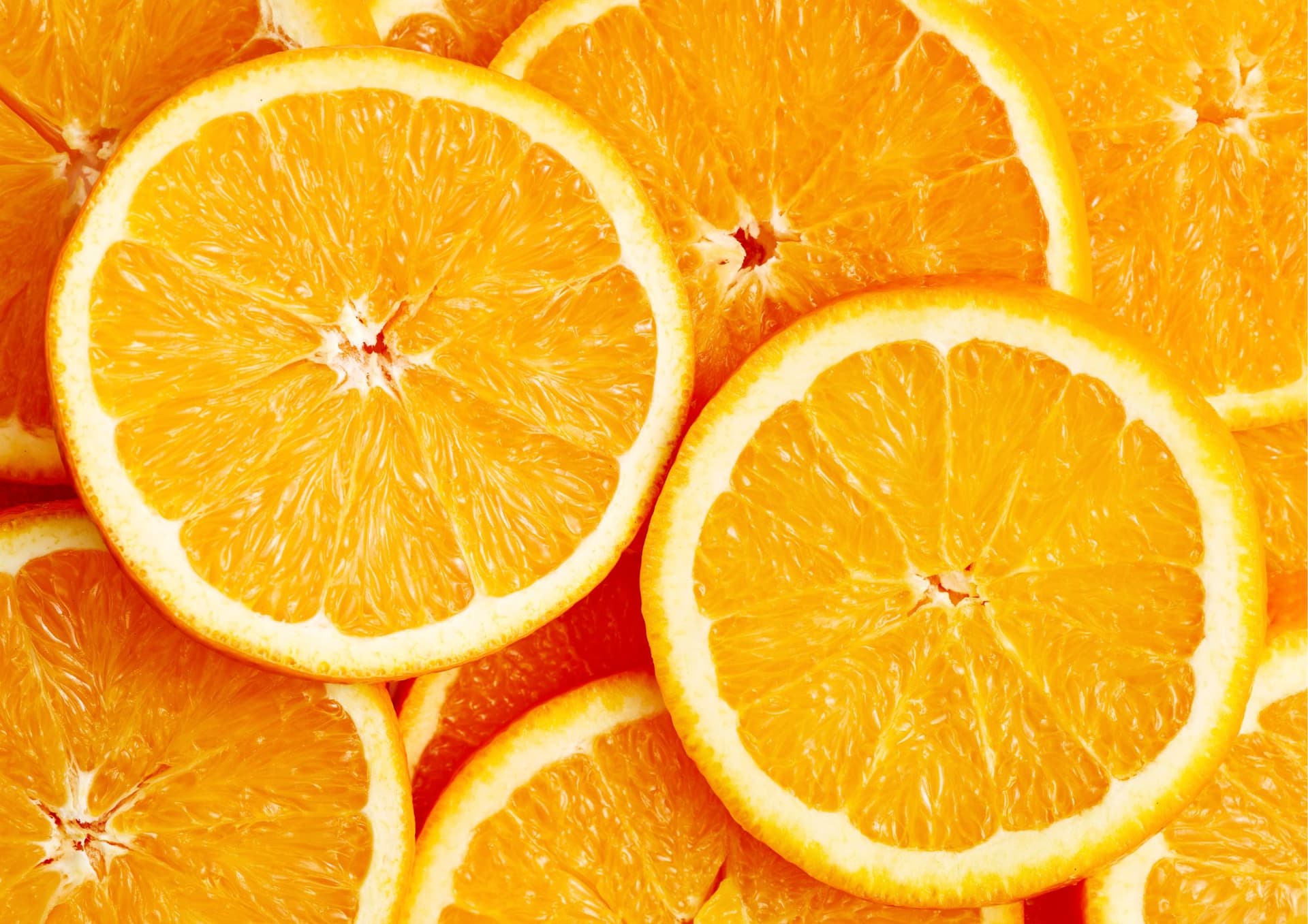
The turning point came on May 20, 1747, aboard the HMS Salisbury, patrolling the Bay of Biscay. A Scottish ship's surgeon named James Lind selected twelve sailors who were all sick with scurvy, paired them off, and gave each pair a different addition to their standard diet: cider, a diluted sulfuric acid tonic, vinegar, seawater, a paste of garlic and spices, and for the last pair two oranges and a lemon.
The results weren't subtle. The men given citrus recovered so quickly that one was fit to return to duty within six days, while the other pairs saw little to no improvement. What Lind had stumbled into is now widely regarded as one of the first controlled clinical trials in the history of medicine a fact striking enough that 2022 was marked as its 275th anniversary by nutrition researchers.
The Cure Nobody Used
Here's the part of the story that tends to surprise people: Lind's experiment didn't immediately fix anything. He published his findings in A Treatise of the Scurvy in 1753, six years after the trial and even then, the British Navy was slow to act. Citrus was expensive and hard to preserve on long voyages, the science of why it worked didn't exist yet, and Lind's own writing buried the finding among many other proposed remedies rather than presenting it as a clear, singular answer.
It took decades of continued deaths, further advocacy from naval physicians, and mounting institutional pressure before the Royal Navy finally began systematically issuing citrus juice to sailors by the close of the 18th century. British sailors' habit of drinking lime juice on long voyages is where the nickname "limeys" comes from. It's a sobering detail: the cure had been demonstrated, in a controlled experiment, roughly two generations before it was actually put into widespread practice.
A Breakthrough, By Guinea Pig
Even after citrus was accepted as an effective treatment, nobody knew why it worked there was no concept yet of a single, identifiable nutrient behind it. That changed in 1907, when Norwegian scientists Axel Holst and Theodor Frølich were trying to find an animal model to study beriberi, an unrelated deficiency disease. Almost by accident, they discovered that guinea pigs fed a restricted diet developed a condition strikingly similar to human scurvy.
This turned out to be an enormously lucky break. Most laboratory animals can manufacture their own vitamin C internally and simply can't get scurvy no matter what they're fed humans, guinea pigs, and only a handful of other species lack that ability. Without a reliable animal model, there was no way to systematically test which foods contained the missing "antiscorbutic factor." Holst and Frølich's discovery finally gave researchers exactly that.
Five years later, in 1912, Polish biochemist Casimir Funk proposed that a whole family of these trace dietary substances existed, essential in tiny amounts to prevent specific diseases he called them "vitamines." The term (later shortened to "vitamin") gave scientists a name for the kind of thing they were now hunting for.
A Dinner With Paprika
The final piece of the puzzle came together through the work of Albert Szent-Györgyi, a Hungarian biochemist working on an entirely different question: the chemistry of how cells use oxygen. While researching at Cambridge in the late 1920s, he isolated a reactive, easily oxidized compound from the adrenal glands of cattle. Not yet sure what he'd found, he gave it the deliberately noncommittal name "hexuronic acid."
Szent-Györgyi suspected this compound might be the long-sought antiscorbutic factor, but he'd run out of adrenal gland tissue to work with and needed a bigger supply. Returning to Hungary to take a position at the University of Szeged a city famous for growing paprika he found his answer in an unexpected place. As he later recounted in his autobiography, his wife served him fresh red paprika for dinner one evening. Not particularly wanting to eat it, he took it to his lab to test instead, reasoning it was the one plant he hadn't yet tried. By around midnight, he had his answer: paprika was, in his words, a "treasure chest full of vitamin C."
Where adrenal glands had yielded grams, paprika yielded kilograms. In April 1932, working with fellow researcher Joseph Svirbely, Szent-Györgyi confirmed that his hexuronic acid protected guinea pigs from scurvy. Almost simultaneously, American researchers Charles Glen King and W. A. Waugh independently announced their own isolation of crystalline vitamin C — a detail often left out of the story, but a reminder that major discoveries are rarely made by just one person working entirely alone.
A Name and a Nobel
With the compound's identity confirmed, Szent-Györgyi sent a sample to Walter Norman Haworth, a carbohydrate chemistry expert at the University of Birmingham. Working with colleague Edmund Hirst, Haworth mapped out the complete chemical structure in 1933. With the mystery fully solved, the name changed one last time, from the noncommittal "hexuronic acid" to "L-ascorbic acid" built from the Latin scorbutus, "scurvy," with the prefix a-, meaning "without."
In 1937, the Nobel committee recognized the work on two fronts: Szent-Györgyi received the Nobel Prize in Physiology or Medicine, and Haworth shared the Nobel Prize in Chemistry. A disease that had killed sailors by the hundreds of thousands for centuries finally had both a cause and a name.
Why This Story Still Matters
It's easy to take a vitamin C tablet, or a glass of orange juice, for granted. But behind that small act sits nearly four centuries of trial, error, missed connections, institutional stubbornness, and eventually, genuine scientific breakthrough from a folk remedy on a frozen river, to a shipboard trial that helped invent the clinical study, to a Hungarian chemist's late-night discovery in a bowl of paprika he almost didn't eat.
Frequently Asked Questions
Who discovered vitamin C? No single person "discovered" it it was a centuries-long relay. James Lind proved citrus cured scurvy in 1747, and Albert Szent-Györgyi isolated and identified the actual compound in the late 1920s and early 1930s, for which he won the 1937 Nobel Prize.
When was vitamin C actually discovered? The compound itself (ascorbic acid) was isolated in the late 1920s and formally identified as the antiscorbutic factor in 1932, with its chemical structure confirmed in 1933 though its effects had been observed for centuries before that.
Why did it take so long to solve, if citrus was known to work since the 1700s? Knowing that something works and knowing why are very different problems. It took the discovery of a reliable animal model (guinea pigs, in 1907) before scientists could systematically isolate the actual compound responsible, rather than just the food source that contained it.
Did James Lind win a Nobel Prize for his discovery? No the Nobel Prizes weren't established until 1901, well over a century after Lind's 1747 experiment. His contribution is instead remembered as one of the first controlled clinical trials in medical history.
Sources consulted: PubMed and Nutrition in Clinical Practice (Wiley) historical reviews of scurvy and vitamin C; Science Learning Hub (New Zealand); Nobel Prize biographical archive; Science History Institute; American Chemical Society National Historic Chemical Landmarks; Encyclopedia.com biographical entry on Albert Szent-Györgyi.